7 Outdated Lighting Habits to Ditch in 2026 (And What to Replace Them With)
Still using cool white bulbs, mismatched dimmers, and a single overhead fixture? Here are 7 outdated lighting habits that make homes look dated in 2026 — and the modern LED replacements that save energy and look far better.

7 Outdated Lighting Habits to Ditch in 2026 (And What to Replace Them With)
Your home could be lit beautifully, efficiently, and cheaply — but a handful of stubborn old habits are probably standing in the way. Some of these go back decades. Others crept in when LED technology was still immature and left a bad first impression. In 2026, there's no reason to keep any of them.
Here are seven lighting habits that make homes look dated, cost more than they should, or just produce bad light — and the exact modern replacements worth making the switch to.
---
1. Using Cool White (5000K+) Bulbs Everywhere
This was the most common early LED mistake. When LEDs first hit the mainstream around 2012–2015, the cheapest bulbs ran cool — 5000K to 6500K, the color of a slightly overcast sky. They felt harsh, clinical, and vaguely like a dentist's office. A lot of people installed them in living rooms, bedrooms, and kitchens and concluded that "LED light looks terrible."
Why it's still a problem in 2026: Cool white light suppresses melatonin production in the evening. A 2019 study in *Chronobiology International* found that exposure to blue-heavy light (5000K+) within two hours of bedtime measurably delays sleep onset. For living spaces used in the evening, it's a genuine health and comfort issue, not just aesthetics.
What to use instead: Match color temperature to the room and time of day.
- Bedrooms and living rooms: 2700K–3000K (warm white) — the same tone as old incandescent bulbs
- Kitchen task lighting: 3000K–4000K (neutral white) — bright enough to work under without harshness
- Garage, utility room, workshop: 5000K is appropriate here — you want to see clearly
The [U.S. Department of Energy's SSL program](https://www.energy.gov/eere/ssl/color-quality-leds) recommends 2700K–3000K for residential spaces where occupants spend evening hours. Your living room is not a warehouse. Stop lighting it like one.
---
2. Leaving Incandescent Bulbs in Hard-to-Reach Fixtures
"I'll swap it when it burns out" is lighting inertia dressed up as practicality. The problem: incandescents burn out roughly every 1,000–2,000 hours. A ceiling fixture running 4 hours a day will need replacing every 8–14 months. A comparable LED lasts 15,000–25,000 hours — that's the same fixture running for 10+ years without a ladder trip.
The real cost math: A standard 60W incandescent costs about $1 per bulb. Running it for 1,000 hours at the U.S. average residential rate ($0.17/kWh) costs $10.20 in electricity. The LED equivalent (8–10W) costs about $1–3 per bulb and uses $1.36 in electricity over the same 1,000 hours. The [Energy Star program](https://www.energystar.gov/products/lighting_fans/light_bulbs) estimates the typical household saves $225 or more per year switching all bulbs to certified LEDs.
What to do instead: The next time any hard-to-reach bulb dies, replace it with a dimmable A19 LED at 2700K–3000K and 800 lumens. You won't touch that fixture for a decade.
---
3. Installing Dimmer Switches Without Checking LED Compatibility
This one causes real damage. Older phase-cut (TRIAC) dimmer switches were engineered for incandescent bulbs — resistive loads. LED drivers are fundamentally different. Pairing an incompatible dimmer with an LED bulb causes flickering, buzzing, limited dimming range, and can shorten LED lifespan significantly.
The scope of the problem: A 2021 survey by the Lighting Research Center at Rensselaer Polytechnic Institute found that LED flicker was among the top complaints in homes that had transitioned from incandescent — and incompatible dimmers were the leading cause in fixtures professionally installed to spec.
What to use instead: Look for dimmers explicitly marked "LED compatible" or "multi-way LED dimmer." Lutron's Caséta and Leviton's Decora Smart lines are widely recommended by electricians for reliable LED dimming. Always cross-reference the bulb manufacturer's compatibility list — most publish them online.
---
4. Relying on a Single Overhead Light for an Entire Room
One ceiling fixture centered in a room was the default residential lighting design for most of the 20th century. It creates flat, shadowless illumination that reads as institutional — equally bright everywhere, interesting nowhere.
Why designers abandoned it: Layered lighting — combining ambient (overhead), task (focused work light), and accent (decorative or highlighting) — has been the professional standard for decades. The Illuminating Engineering Society's *Lighting Handbook* (10th edition) describes layered lighting as essential to residential spaces "perceived as comfortable and inviting."
What to replace it with: You don't need a full renovation. Start with plug-in additions:
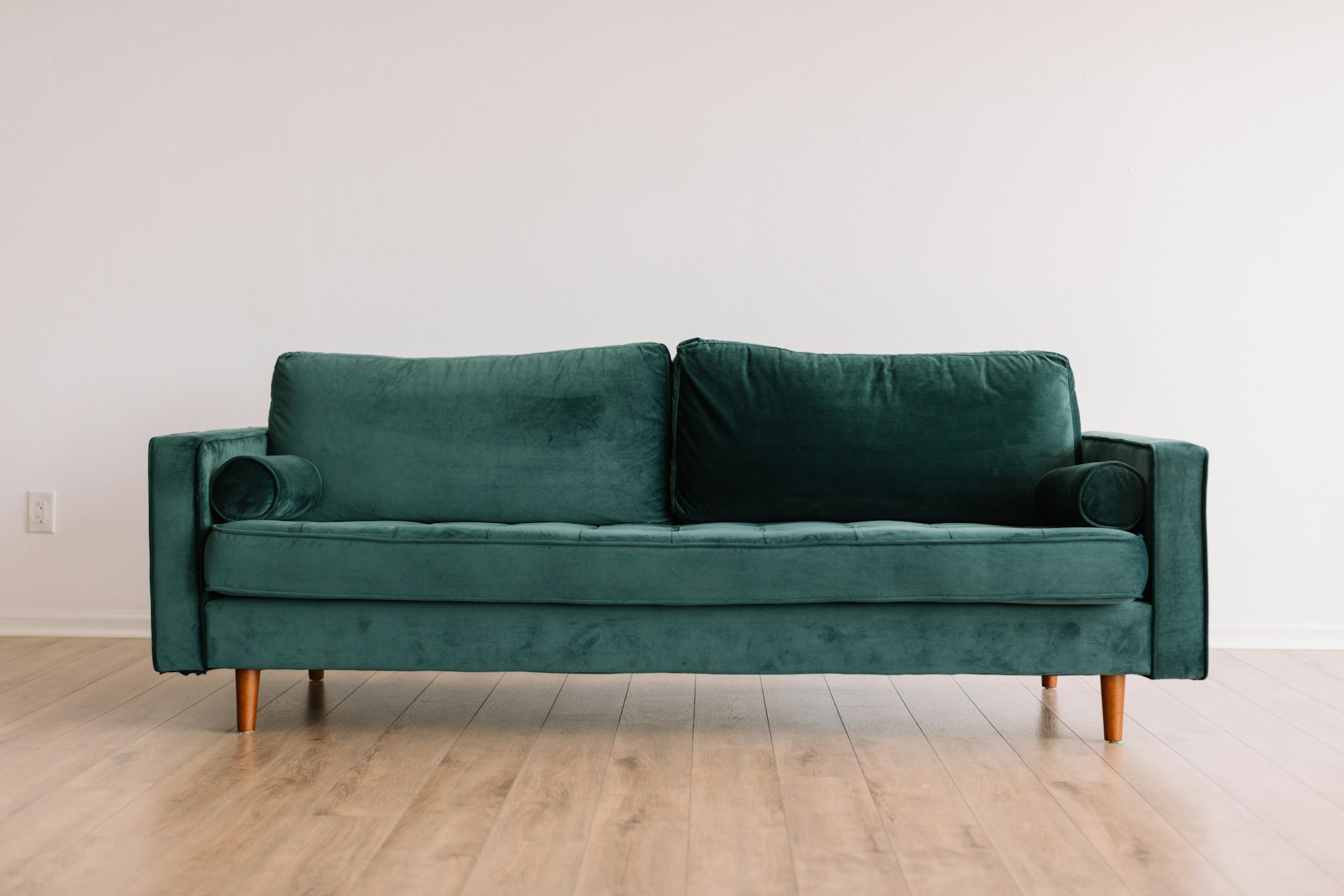
- A floor lamp in a corner creates instant depth and warmth
- Under-cabinet LED strips in the kitchen add functional task light without wiring
- Table lamps flank seating areas for reading and ambiance
- Accent lighting (LED picture lights, shelf strips) adds dimension to flat walls
See our guide to [budget LED lighting upgrades under $50](/blog/budget-led-lighting-upgrade-under-50) for specific product picks that cost less than a single overhead fixture replacement.
---
5. Using Warm White Bulbs in the Kitchen and Ignoring Color Rendering
Color temperature and color rendering are two different things that get conflated constantly. A 2700K bulb looks warm and cozy — but if its Color Rendering Index (CRI) is below 80, produce will look dull, meat will look gray, and food will consistently look less appetizing than it is.
What CRI actually means: CRI measures how accurately a light source renders colors compared to natural daylight, on a scale of 0–100. Incandescent bulbs score 100. Budget LEDs often score 70–80. High-CRI LEDs (90+) render food, skin tones, and materials accurately.
The Energy Star standard: [Energy Star certified bulbs](https://www.energystar.gov/products/lighting_fans/light_bulbs/key_product_criteria) require a minimum CRI of 80. For kitchens and bathrooms where accurate color matters, look for CRI 90+ bulbs — available from Cree, Philips, and GE at only a slight premium over standard LEDs.
What to do: In the kitchen, swap to 3000K bulbs with CRI 90+ for countertop and task areas. Keep 2700K in the dining area. The difference in how food looks is immediately noticeable.
---
6. Leaving Recessed Can Lights with Old Trim and Inefficient Bulbs
Recessed can lights (also called downlights or pot lights) became ubiquitous in 1990s and 2000s construction. The original fixtures used PAR or BR incandescent bulbs, later updated to halogen. The cans are still functional — but if they're running halogen BR30s or early LED retrofit bulbs with poor optics, they're wasting energy and producing poor directional light.
The problem with old-style retrofits: First-generation LED retrofit bulbs for recessed cans were often dim in the center and washed out at the edges. Modern integrated LED downlight retrofits use purpose-built optics that distribute light cleanly across a wider beam angle.
What to use instead: Integrated LED retrofit kits ("wafer lights" or "disk lights") replace the trim and bulb as a single unit and clip directly into existing 4" or 6" can housings. Look for:
- 650–800 lumens for standard ceiling heights
- 2700K–3000K for living areas, 3000K–4000K for kitchens
- CRI 90+
- Damp-rated if near showers
These kits typically run $8–$18 per fixture and install in minutes. A house with 12 recessed cans can be updated for under $150. Check our complete guide to [how much you can save switching to LED](/blog/how-much-can-you-save-switching-to-led) for the full payback calculation.
---
7. Ignoring Smart Bulb Compatibility Until After Purchase
Smart LED bulbs are genuinely useful — scheduled lighting, remote dimming, wake-up routines, and automatic color temperature shifts throughout the day. But the smart bulb market remains fragmented in ways that catch buyers off guard.
The common compatibility mistakes:
- Buying Zigbee bulbs without a compatible hub
- Installing smart bulbs on circuits controlled by a wall dimmer (smart bulbs need standard on/off switches — dimming happens in the app)
- Mixing ecosystems (Hue with Wyze with LIFX) and discovering they don't share automations
- Buying Wi-Fi bulbs rated only for 2.4GHz on a 5GHz-only router
The 2026 landscape: The Matter smart home standard (backed by Apple, Google, Amazon, and Samsung) is now mature enough that Matter-certified bulbs work across all major ecosystems without a proprietary hub. If you're building out a smart lighting setup in 2026, Matter-certified devices are the only sensible long-term choice.
Before buying any smart bulb:
1. Confirm your router broadcasts 2.4GHz
2. Remove any dimmer switches from circuits where smart bulbs will be installed
3. Verify ecosystem compatibility — Alexa, Google Home, Apple HomeKit, or Matter
4. Confirm CRI rating on color-changing bulbs (many RGBW bulbs dip below 70 CRI in white modes)
Our comparison of [smart LED bulbs vs regular LEDs](/blog/smart-led-bulbs-vs-regular) covers the full cost-benefit breakdown if you're still deciding whether smart bulbs are worth the premium.
---
The Common Thread
All seven of these habits share the same root: decisions made when LED technology was worse, more expensive, and less standardized than it is today. In 2026, LEDs are cheaper per lumen than any light source in history. CRI 90+ bulbs are commodity products. Smart lighting works reliably across ecosystems.
None of these fixes require rewiring, permits, or electricians. The [Energy Star program](https://www.energystar.gov/products/lighting_fans/light_bulbs) estimates that if every American home replaced its five most-used light fixtures with certified LEDs, it would save more than $8 billion in energy costs annually.
Start with the room you spend the most time in. Fix the color temperature. Add a lamp. Check your dimmers. That's an afternoon of work that will change how your home looks and feels for the next decade.
---
Frequently Asked Questions
What lighting mistakes make a home look dated in 2026?
The most visible: cool white (5000K+) bulbs in living spaces, single overhead fixtures with no supplemental lighting, and mismatched color temperatures across adjacent rooms. Warm, layered lighting with consistent 2700K–3000K tones instantly reads as intentional and modern.
Should I replace my cool white LED bulbs with warm white ones?
Yes, in most living spaces. Cool white (5000K+) is appropriate for garages, workshops, and utility rooms. For bedrooms, living rooms, and dining areas, 2700K–3000K warm white dramatically improves comfort and reduces evening blue-light exposure, which [research links to better sleep quality](https://www.ncbi.nlm.nih.gov/pmc/articles/PMC4967375/).
Are recessed can lights still in style or should I switch to something else?
Recessed can lights are not inherently dated — the issue is usually the bulb and trim, not the fixture itself. Modern integrated LED retrofit kits update the optics and efficiency of existing cans without replacing the housing. Existing recessed cans are worth retrofitting rather than removing.
How do I update my home lighting without hiring an electrician?
Focus on bulb swaps (no electrical work required), plug-in floor and table lamps (no wiring), and LED retrofit kits for recessed cans (screw-in installation). The majority of meaningful lighting improvements in an existing home can be done without touching the wiring.
What LED bulbs give the warmest, most cozy light for under $20?
Look for A19 bulbs rated 2700K with CRI 85+. Philips, GE, and Cree all offer 4–6 packs in this range at under $20. Buying by Kelvin (2700K specifically) gives you predictable results across brands rather than relying on vague "soft white" labels.
Do smart bulbs work if someone turns off the wall switch?
Not reliably. Smart bulbs need constant power — turning off the wall switch cuts power to the bulb and disrupts scheduled automations. The standard workaround is to leave wall switches permanently on and use smart switch covers that prevent the switch from cutting power while still giving physical control.